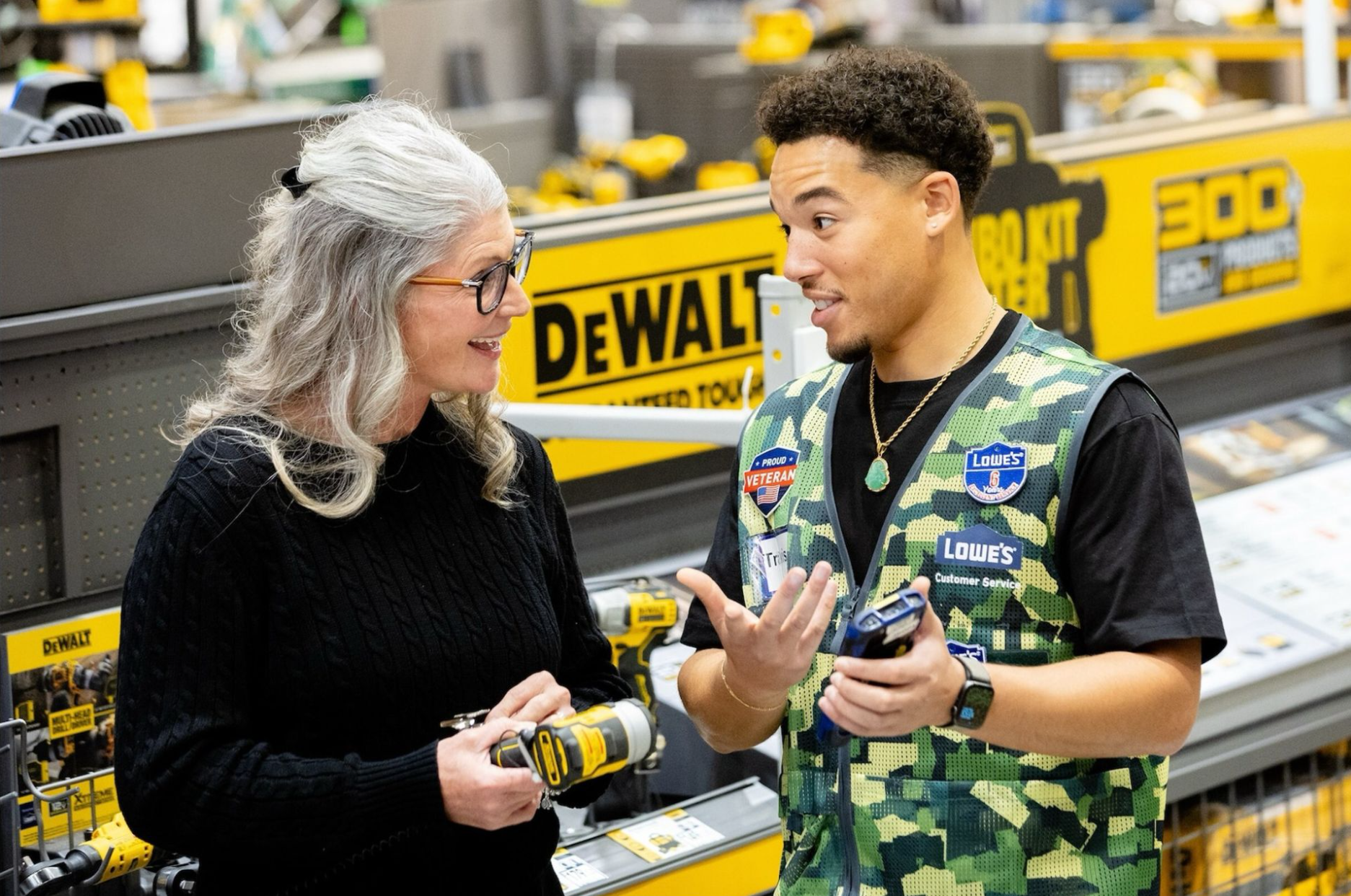
OpenAI’s new State of Enterprise AI 2025 report looks at how over 1 million business customers are using AI at work, combining usage data with a survey of about 9,000 workers across nearly 100 companies. Instead of focusing on future hype, it shows what is actually happening inside organizations today: where AI is saving time, where it is falling short, and how some teams are pulling ahead—with concrete examples like Lowe’s Mylow assistants, which now answer nearly 1 million questions a month and help associates give consistent project advice across more than 1,700 stores.
For leaders and teams who are not living in the weeds of AI every day, the report is a useful window into how work is quietly changing behind the scenes, from customer‑facing experiences like Mylow that double online conversion to internal copilots and custom GPTs that help employees move faster on everyday tasks.
The headline is that AI is no longer just a side experiment or a chat window on someone’s desktop. OpenAI reports that weekly ChatGPT Enterprise messages have grown roughly 8x in the last year, and that the average worker is sending about 30 more messages per week than before.
For workers, that growth looks less like science fiction and more like very practical help:
Retail is seeing the same pattern at scale: tools like Mylow sit inside existing channels (web, mobile, and in‑store devices) so that both shoppers and associates can reach for AI in the flow of work, rather than jumping out to a separate tool. The pattern is simple: when AI is easy to reach, people reach for it often, and the small time savings add up quickly across a week or a team.
One of the more important shifts in the report is that AI is not only speeding up familiar tasks; it is also expanding what non‑specialists can do. About 75% of surveyed workers say they can now complete tasks they previously could not, including things like coding support, spreadsheet automation, data analysis, and creating small internal tools or custom AI assistants.
In practice, this means:
The Lowe’s case study shows a similar “new kinds of work” story on the front lines: Mylow Companion gives every associate, including new hires, access to expert‑level guidance on product specs, project steps, and order status, effectively raising the floor on what any one person can confidently handle in the aisle. The report describes a “frontier worker” group—the most intensive 5% of users—who send about 6x more messages than the median worker and up to 17x more messages for coding tasks, and these power users mirror the most engaged associates or specialists who build and refine the AI‑powered workflows everyone else uses.
The same kind of gap shows up at the organization level. Across industries, adoption is broad and growing—OpenAI notes that the median sector grew more than 6x year‑over‑year, with technology, healthcare, and manufacturing growing fastest. But “frontier firms” (the top 5%) are using AI much more deeply:
The Lowe’s example reads like a playbook for those frontier firms: by wiring Mylow into core shopping journeys and giving associates a dedicated companion app, Lowe’s is not just providing a chatbot—it is standardizing expert guidance, driving higher conversion, and lifting customer satisfaction scores by roughly 200 basis points when associates use Mylow Companion to help in‑store. In other words, access to AI is now fairly widespread; what differs is how well organizations integrate it into daily operations, data, and decision‑making.
For teams that do not consider themselves “AI companies,” the report offers a few practical lessons.
The report also emphasizes that enterprise AI is still in the “early innings.” As models improve at complex tasks and gain better understanding of each organization’s context, the shift will likely move from asking AI for single outputs to delegating multi‑step workflows end‑to‑end—from answering a single project question to orchestrating entire projects, orders, and follow‑ups through assistants like Mylow.
This post only scratches the surface of the data and case studies in the full report. For those who want to see the charts, methodology, and sector‑specific detail—including the full Lowe’s story and other examples across software, finance, and healthcare—the original article and PDF are available directly from OpenAI here: The state of enterprise AI 2025.